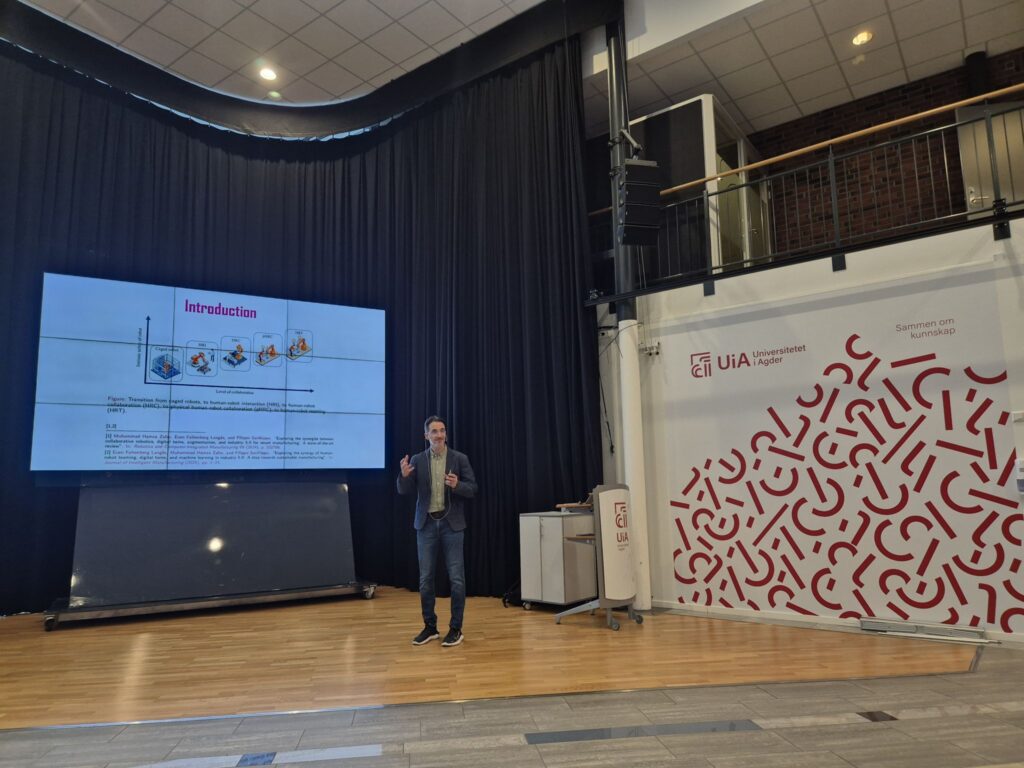
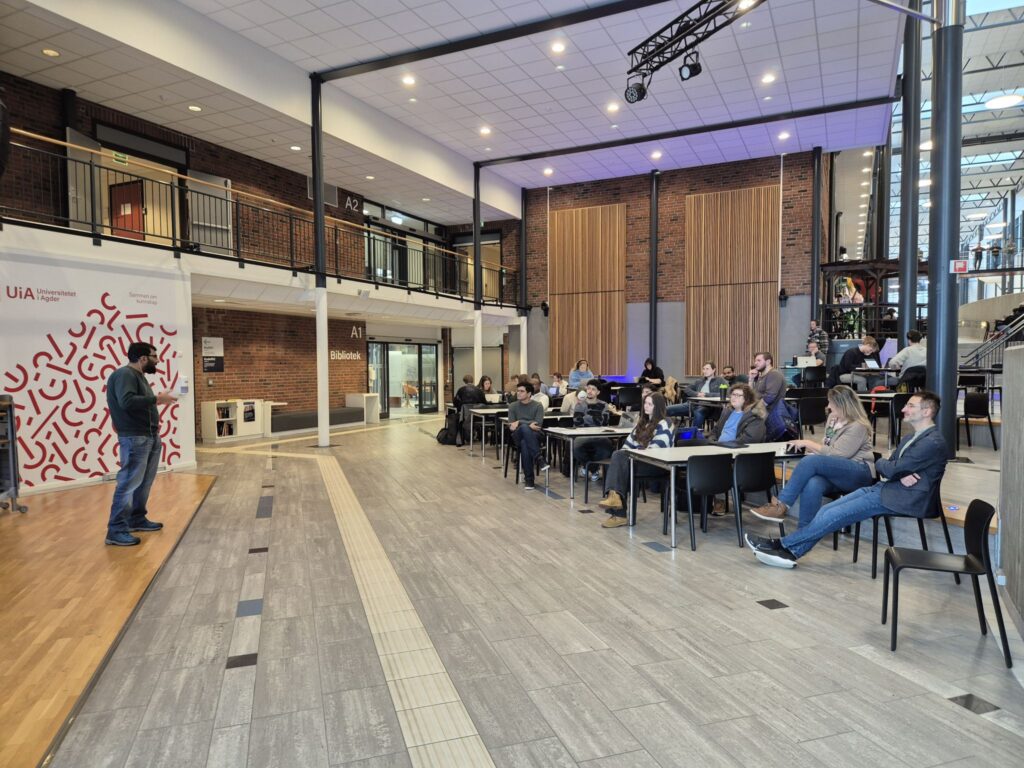
On February 10, 2025, the University of Agder hosted a dynamic dissemination event as part of the ImmersiveSurgicalEdu project, bringing together students, researchers, and academic staff to explore how emerging technologies are transforming surgical education.
Held at B-bygget in Grimstad, the event welcomed around 20 participants, creating an interactive and engaging environment for discussing the role of Virtual Reality (VR), Augmented Reality (AR), and haptics in medical training.
Beyond the Classroom: A New Era of Learning
The event, titled “Beyond the Classroom: Virtual Reality, Augmented Reality and Haptics for Enhanced Surgical Training and Education,” highlighted how immersive technologies can bridge the gap between theory and hands-on clinical practice.
With traditional training often limited by access to patients and equipment, these technologies offer a powerful alternative — enabling students to practice, repeat, and refine their skills in safe, controlled environments.
Key Highlights from the Event
Integrating VR, AR, and Haptics in Surgical Training
The first presentation provided a comprehensive overview of how immersive technologies are reshaping surgical education. It explored current challenges and presented future perspectives on combining VR, AR, and haptics to enhance learning outcomes and skill acquisition.
Event-Based Vision for Assistive Healthcare
Participants were introduced to the innovative use of event-based cameras in healthcare applications. The talk highlighted how these sensors can improve responsiveness in dynamic environments and support assistive technologies, particularly in human-centered robotic systems.
Touch and Learn: Training Through Experience
One of the most engaging sessions showcased a gamified VR-haptics framework designed to train palpation skills. By combining immersive visuals with tactile feedback, the system allows users to “feel” virtual patients while receiving real-time performance feedback — a significant step toward more effective and measurable skills training.
Collaboration Across Europe
The ImmersiveSurgicalEdu project is a collaborative initiative led by the University of Agder (Norway), in partnership with:
- University of Siena (Italy)
- Kaunas University of Technology (Lithuania)
- Lithuanian University of Health Sciences (Lithuania)
Together, these institutions are working to develop next-generation, haptic-enabled learning tools for surgical education.
A Step Toward the Future
The event not only showcased cutting-edge research but also sparked meaningful discussions on the future of medical education. Participants explored how immersive technologies can enhance engagement, improve skill development, and provide more standardized training experiences.
As the healthcare sector continues to evolve, initiatives like ImmersiveSurgicalEdu are paving the way for more accessible, effective, and innovative learning environments — truly taking surgical education beyond the classroom.